 Glendale Mold Removal
 Black Mold Removal in Glendale, AZ
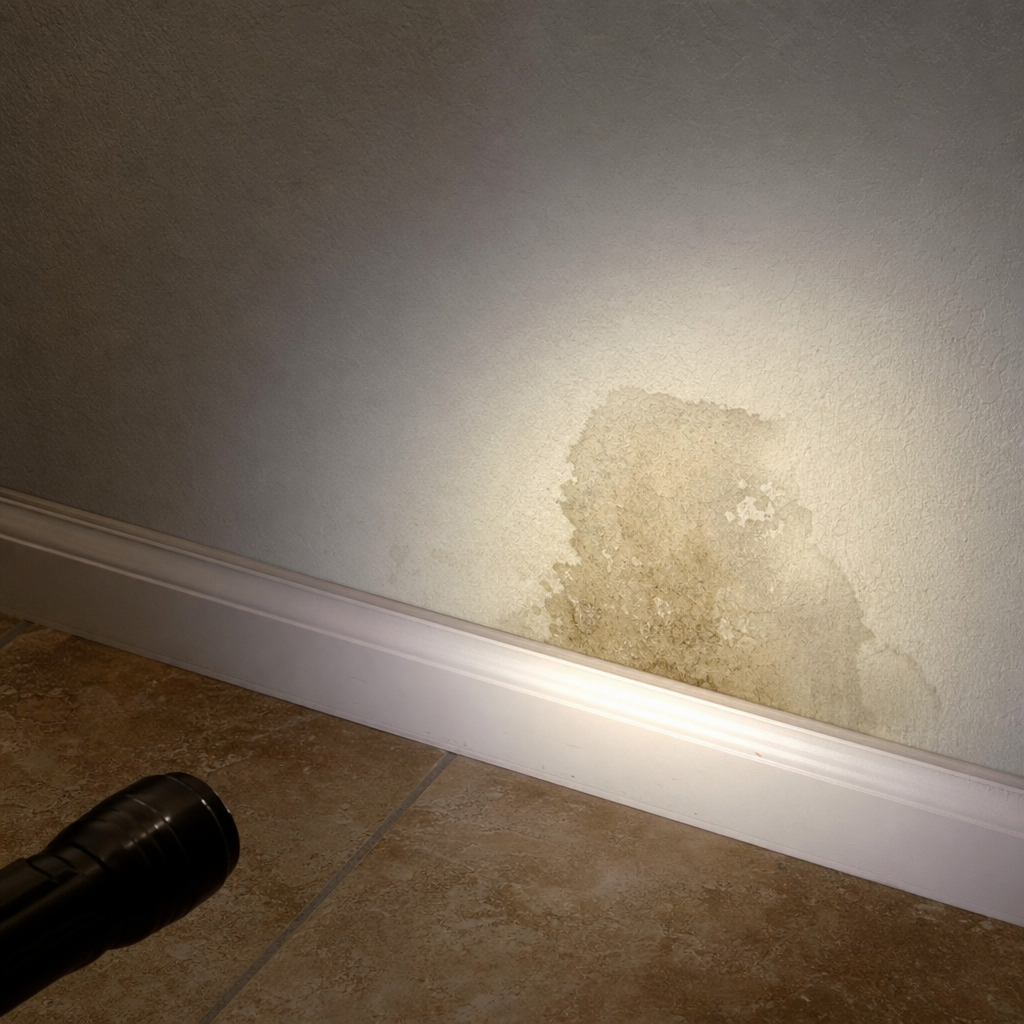
Found black mold in your Glendale home? Here’s the honest version most companies won’t lead with: the color of mold doesn’t determine the process or the price. “Black mold” usually refers to Stachybotrys chartarum, a species that grows on materials soaked for weeks, but many common molds also look black, and every substantial indoor colony gets the same professional treatment: containment, removal, HEPA filtration, and clearance. What black mold does reliably tell you is that you’ve had a long-running water problem, and in Glendale’s older housing stock we can usually tell you exactly which one.
What black mold actually is
Stachybotrys is a greenish-black, often slimy mold that colonizes cellulose materials (drywall paper, ceiling tiles, wood) that have stayed saturated for an extended period. It’s slower to establish than the everyday molds (Aspergillus, Penicillium, Cladosporium, several of which can also appear dark), which is why finding it means the moisture has been there a while.
On health: we keep this simple and honest. Mold can aggravate allergies and asthma, and nobody should live with substantial indoor mold growth of any species. We don’t do the “toxic death mold” sales script, and we’d encourage you to hang up on anyone who does, fear-based pricing is the oldest trick in this unregulated industry.
And it is unregulated: Arizona has no state mold license. No agency here certifies black mold removers, whatever their ads imply. Our specialists are IICRC-certified and follow the S520 standard, which is the only meaningful credential in this state. More on how we work on the mold remediation page.
Where we find it in Glendale homes
Because Stachybotrys needs weeks of saturation, it maps precisely onto the slow-leak failure points of Glendale’s older housing:
Behind original tub and shower surrounds. The most common location, period. A 1960s–70s ranch home near downtown Glendale with its original tile and a slow drip at the valve has had decades to soak the wall cavity. The first sign is often a musty smell in the hall bathroom, not visible mold.
Under flooring over slab leaks. Central Glendale’s pre-1975 homes run galvanized or early copper supply lines under the slab. A pinhole leak wicks moisture up for months. By the time the laminate cups or the wood darkens, the underside is often black with growth. These jobs start as water damage cleanup if the leak is active.
Wall and ceiling cavities under old roof leaks. A monsoon leak that “only happened during that one big storm” in July often kept the insulation and drywall damp well into fall. The stain on the ceiling is the visible 10%; the cavity side is where Stachybotrys lives. See monsoon & roof leak mold.
Swamp cooler ducts and drip zones. Evaporative coolers keep materials wet by design. Neglected units in Glendale’s older neighborhoods, and the ceiling cavities around their duct penetrations, are reliable black mold sites. Covered in depth under AC, swamp cooler & HVAC mold.
AC condensate overflow zones. Air handler closets and attic platforms where a clogged condensate line overflowed repeatedly across a couple of summers.
How safe removal works
Black mold removal follows the full S520 process, the same steps as our remediation service, executed with strict containment discipline because heavily sporulating colonies spread easily when disturbed:
- Containment first. 6-mil poly barriers, negative air pressure with HEPA-filtered exhaust, sealed HVAC registers. Nobody cuts anything until the zone is sealed.
- Controlled removal. Colonized drywall, insulation, and trim are cut out with minimal disturbance, bagged inside containment, and disposed of. Framing is HEPA-vacuumed, cleaned, and treated as needed.
- Air scrubbing. HEPA air scrubbers run during and after removal to capture what demolition puts in the air.
- Dry-out. The cavity is dried to verified-normal moisture content, the condition that prevents regrowth.
- Clearance. Verification, with air sampling when warranted, before containment comes down.
- Source repair. The valve, pipe, roof section, or condensate line that fed the colony gets fixed by the appropriate licensed trade. Skip this and the mold returns on schedule.
Most black mold jobs in Glendale are contained to one or two areas and land in the standard $1,500–$6,500 remediation range, usually the lower half. Full ranges are on the pricing page.
What to do before we arrive
- Don’t disturb it. No scrubbing, no bleach, no peeling back materials to “see how bad it is.” Disturbance is how a one-wall problem becomes a one-house problem.
- Don’t blast air at it. Keep fans off in that room. Normal AC is fine.
- Close the room off if you can, and limit time in it, especially for household members with allergies or asthma.
- Photograph it from the doorway for your records and any insurance conversation.
Testing: optional, sometimes worth it
If you want species confirmation, for an insurance claim, a real estate negotiation, a landlord dispute, or peace of mind, surface and air sampling with lab identification is part of a standard $300–$700 inspection. If you don’t need the paperwork, we’ll tell you to skip it: the removal process and the price don’t change based on the species name.
We handle black mold removal across Glendale and the West Valley, Peoria, Sun City, El Mirage, and Youngtown, with same-day assessments in most cases. Request a free assessment through the form; you’ll get a written scope, a firm price, and zero scare tactics.
Frequently Asked Questions
Is the black mold in my house the dangerous kind?
Color alone can't tell you. Plenty of common molds look black, and Stachybotrys, the species people mean by 'toxic black mold', requires lab identification. Practically, it doesn't change the decision much: substantial indoor mold of any species should be removed with proper containment, and mold can aggravate allergies and asthma regardless of color.
Does black mold removal cost more than regular mold removal?
Not because of the color. Pricing follows scope (square footage, containment complexity, materials removed) the same $1,500–$6,500 range as other remediation. Be wary of companies that jack the price the moment they say the words 'black mold.' The process is the process.
Where does black mold usually grow in Glendale homes?
Wherever materials stay soaked for weeks: behind shower walls, under slab-leak flooring, in wall cavities below monsoon roof leaks, around long-clogged AC condensate pans, and in swamp cooler ducts. Stachybotrys in particular needs sustained saturation, which is why it signals a long-running water problem.
Can I remove black mold myself?
A palm-sized patch on tile or another non-porous surface, yes. Anything on drywall, anything larger than a couple square feet, or anything with a musty odor suggesting growth inside the cavity, no. Disturbing a large colony without containment spreads spores through the house, and bleach on drywall treats the surface while the colony lives in the material.
Do you test to confirm it's Stachybotrys before removing it?
Only if you want the documentation: for a claim, a sale, or your own records. Surface sampling with lab ID runs as part of a $300–$700 inspection. If you'd rather put that money toward removal, the remediation process is identical either way, and we'll say so plainly.