 Glendale Mold Removal
 Mold Remediation in Glendale, AZ
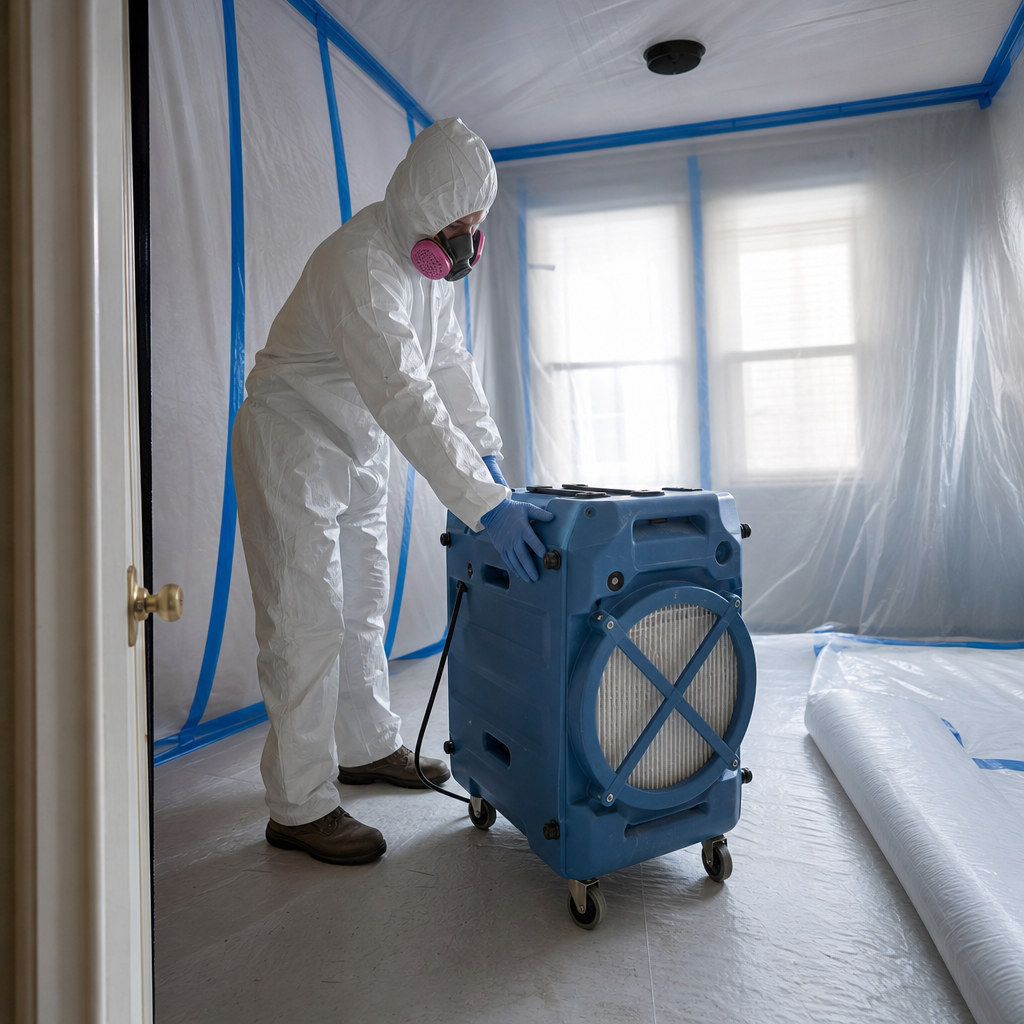
Mold remediation is the full, verified removal of a mold problem: containment so spores don’t spread, physical removal of contaminated materials, HEPA air filtration, drying, and clearance testing that proves the job worked. In Glendale, AZ, typical remediation runs $1,500–$6,500 (Phoenix-metro average is around $1,800), and it starts with a free assessment that produces a firm written scope. Our specialists are IICRC-certified and work to the S520 standard, which matters more here than in most states, because Arizona has no state mold license and the burden of picking a competent remediator falls entirely on you.
The process, step by step
1. Assessment and scope. Moisture readings, source identification, and a written plan: what’s affected, what comes out, what it costs. If the situation is ambiguous, musty smell, nothing visible, we’ll recommend inspection and testing first instead of guessing at a scope.
2. Containment. The work area gets sealed with 6-mil poly sheeting and put under negative air pressure with HEPA-filtered machines exhausting outside. Air flows into the containment, never out of it. This is the step cheap operators skip, and it’s the difference between removing mold and redistributing it through your house. HVAC supplies and returns inside the zone get sealed so spores don’t enter the ductwork.
3. Removal. Porous materials that mold has colonized (drywall, baseboard, insulation, carpet pad) are cut out, bagged inside containment, and disposed of. Semi-porous materials like framing lumber get HEPA-vacuumed, damp-wiped, and where appropriate abraded or treated. Non-porous surfaces are cleaned and verified. We cut to a margin beyond visible growth because mold hyphae extend past what you can see.
4. Drying. Commercial dehumidifiers and air movers bring the cavity to verified-dry, confirmed with moisture meters, not by eyeball, not by “it feels dry.” In monsoon season, when Valley dew points run 55–65°F, this step takes real equipment; a box fan doesn’t dry a wall cavity in July.
5. HEPA air scrubbing and detail cleaning. Air scrubbers run throughout and after the removal, and every surface in containment gets HEPA-vacuumed and wiped.
6. Clearance. Post-remediation verification, visual plus air sampling when warranted, before containment comes down. Then, and only then, is the space ready for rebuild.
7. The water fix. Remediation without a moisture repair is a subscription. Every scope names the source (slab leak, roof, condensate line, cooler, drainage) and we coordinate the licensed trade that fixes it.
What we’re remediating in Glendale, specifically
The jobs in this city cluster around its housing eras:
Slab leak flooring jobs. Central Glendale’s 1950s–1970s ranch belt (the blocks between roughly 43rd and 67th Avenues, Camelback up to Northern) runs original galvanized steel or early copper under the slab. When a line pins holes, moisture wicks up through the slab into wood flooring, laminate, and bottom plates for weeks before anyone notices a warm spot or a warped board. These jobs pair remediation with a plumber, and they’re the most common multi-room scope we see. If water is actively flowing, start with water damage cleanup.
Swamp cooler and duct contamination. Older Glendale homes cooled by evaporative coolers, or retrofitted to AC with the old cooler ducts reused, grow mold at the cooler and seed it downstream. Duct remediation is its own discipline; see AC, swamp cooler & HVAC mold.
Monsoon ceiling and attic jobs. July–September storms find every weak point in Glendale’s older roofs. The attic-side mold that follows a “minor” roof leak is a contained, efficient remediation if caught within weeks, and a whole-ceiling job if ignored until spring. Details at monsoon & roof leak mold.
Bathroom and kitchen cavity jobs. Decades-old homes mean decades-old shower pans, tile grout, and angle-stop valves. The wall behind a 1970s tub surround is the single most common place we open in this city.
Historic-home work. Catlin Court and Old Towne buildings involve plaster, layered materials, and sometimes pre-1980 products that require asbestos testing before disturbance. We scope that honestly upfront rather than “discovering” it mid-job.
Attic, crawlspace, and other hidden-space remediation
Some of the worst mold in a house grows where nobody stands. Attic mold is the big one in Glendale: a roof leak or an overflowing air-handler condensate pan wets the insulation and the underside of the roof deck, and growth spreads across the sheathing for months before anyone climbs up to look. Attic remediation means working in a hot, cramped space. The deck gets HEPA-vacuumed and cleaned or abraded, saturated insulation comes out, and the space is isolated from the living area below so nothing migrates down through can lights and ceiling penetrations.
Crawlspaces are less common here, most of the Valley is slab-on-grade, but the raised-floor bungalows in Catlin Court and Old Towne have them, and a damp crawlspace pushes musty air up through the floor system all year. Those jobs get the same containment, negative air, and clearance discipline as a wall cavity, adapted to the access.
Ductwork sits in its own category: when spores have colonized the runs, swamp-cooler-fed ducts especially, cleaning the rooms without addressing the ducts just re-seeds the house on the next cooling cycle. That work is covered in depth under AC, swamp cooler & HVAC mold. Whatever the space, the standard doesn’t change: contain it, remove the growth, verify, fix the water.
How to compare remediation bids
Get more than one bid, including ours. Then hold every bid to five questions:
- Containment: Does the bid specify poly containment and negative air? If not, spores go house-wide on day one.
- Removal vs. treatment: Does it remove colonized porous materials, or just “treat” them? Spray-only is not remediation.
- Verification: Is clearance testing or post-remediation verification included? “Trust us” is not a verification method.
- Certification: IICRC credentials, named and current. In a state with no mold license, this is the whole credential conversation.
- The water source: Does the bid identify what caused the mold and how it gets fixed? A bid that ignores the moisture source is pricing a temporary result.
A low bid missing items 1, 3, or 5 isn’t cheaper. It’s a different, worse product.
Cost, insurance, and timing
Full pricing detail, including what moves a job inside the $1,500–$6,500 range, is on the pricing page. On insurance: sudden accidental water events (burst pipe, appliance failure) are usually claimable including resulting mold, while gradual leaks and maintenance issues usually aren’t; our photo, moisture-log, and line-item documentation supports the claim either way.
On timing: mold scopes only grow. The colony spreading behind your drywall doesn’t pause while you think it over. Same-day assessments are usually available across Glendale, Peoria, Sun City, El Mirage, and Youngtown, request a free assessment through the form and get a real number today.
Frequently Asked Questions
What does mold remediation cost in Glendale?
Most jobs run $1,500–$6,500, with the Phoenix-area average around $1,800. A single contained area lands at the low end; multi-room or duct-involved jobs run higher. You get a firm written price after a free on-site assessment, the number doesn't change unless the scope does, in writing.
How long does remediation take?
Single-area jobs: usually 1–3 days including drying time. Multi-room or flooring jobs: 3–7 days. Clearance verification happens before containment comes down, so when we say done, it's verified done.
Is Arizona mold remediation regulated?
No. Arizona has no state mold license, so the industry regulates itself through certification. Our specialists are IICRC-certified and follow the S520 standard: containment, negative air, HEPA filtration, source removal, and verification. Ask every bidder about certification; it's the only credential that exists here.
Can't you just spray the mold instead of cutting drywall?
Sprays and foggers kill surface mold but leave the colonized material, and dead mold is still allergenic. The S520 standard requires removing porous materials that mold has penetrated, which is why drywall and baseboard come out. Companies selling spray-only treatments are selling a repeat visit.
Will the mold come back?
Not if the water source is fixed. Remediation removes the growth; the plumbing, roof, or HVAC repair keeps it gone. Every scope we write names the moisture source and its fix, and clearance testing verifies spore levels are normal before we close up.
Do you remediate attic and crawlspace mold?
Yes. Attic mold, usually from a monsoon roof leak or an air handler condensate overflow, is one of the most common scopes we write in Glendale, and the raised-floor bungalows in the historic districts get crawlspace remediation to the same containment and HEPA standard. Tight-space jobs price on access and affected area like everything else; the free assessment produces a firm written number either way.